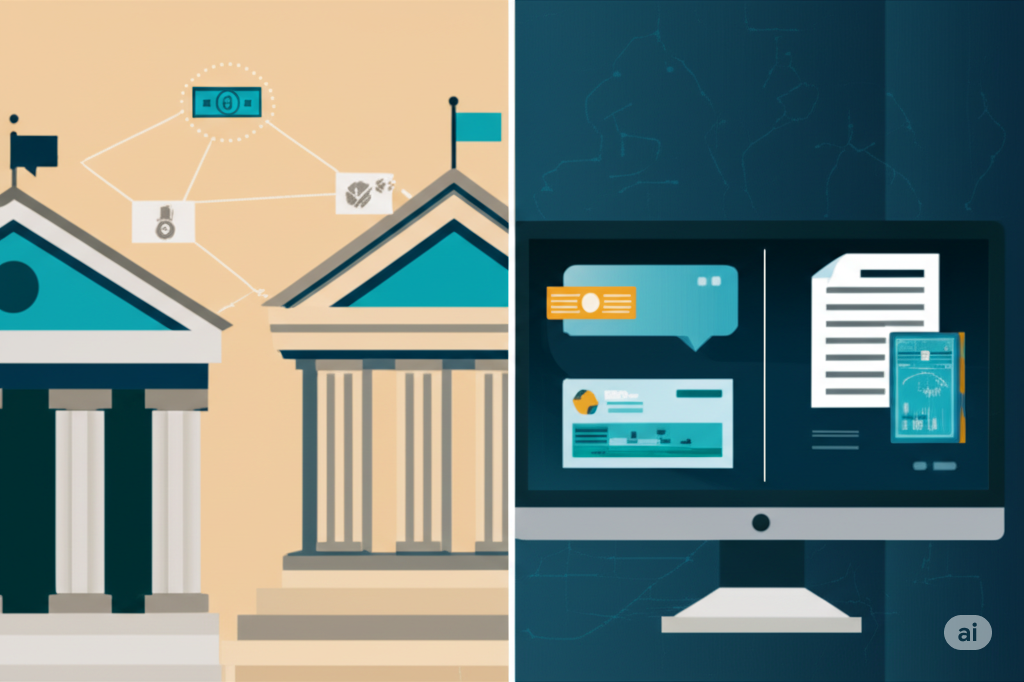
In the dynamic landscape of business finance, securing capital is often a critical hurdle for growth, expansion, or even day-to-day operations. Entrepreneurs and established companies alike are constantly evaluating various funding avenues, each with its own set of advantages and disadvantages. Two prominent options that have gained significant traction, especially in the last decade, are traditional business loans from banks and the more modern, digitally-driven peer-to-peer (P2P) lending platforms. Understanding the nuances of p2p lending vs business loan is not merely an academic exercise; it’s a strategic imperative for any business seeking optimal financial solutions.
This comprehensive guide delves deep into both financing models, dissecting their mechanics, benefits, drawbacks, and the scenarios in which each might be the superior choice. By the end, you’ll have a clearer picture of which path aligns best with your business’s unique needs and financial health, empowering you to make a decision that fuels sustainable success.
Understanding Peer-to-Peer Lending for Businesses
Peer-to-peer lending, often abbreviated as P2P lending, represents a revolutionary shift in the lending industry. It bypasses traditional financial intermediaries like banks, directly connecting individuals or businesses seeking loans with investors willing to provide capital. This disintermediation is facilitated by online platforms that act as marketplaces, streamlining the entire process from application to funding.
How P2P Lending Works
For businesses, the P2P lending process typically involves:
- Application: A business applies for a loan through a P2P platform, providing detailed financial information, business plans, and the purpose of the loan.
- Credit Assessment: The platform conducts its own credit assessment, often using proprietary algorithms that might consider factors beyond traditional credit scores, such as cash flow, industry trends, and social data. Based on this assessment, the loan is assigned a risk rating, which in turn influences the interest rate offered to investors.
- Listing and Funding: The loan request is then listed on the platform for a specified period, allowing a multitude of individual and institutional investors to review the details and bid on portions of the loan. Investors are attracted by the potential for higher returns compared to traditional investments.
- Funding and Repayment: Once the loan is fully funded, the funds are disbursed to the business. The business then makes regular repayments (principal plus interest) directly to the investors through the platform. The platform typically charges fees to both borrowers and lenders for its services.
Key Features and Characteristics of P2P Lending
- Online-Centric: The entire process, from application to repayment, occurs online, offering convenience and speed.
- Diverse Investor Base: Funding comes from a broad pool of individual and institutional investors, not a single bank.
- Risk-Based Pricing: Interest rates are often determined by the borrower’s creditworthiness and the perceived risk, with higher risk generally meaning higher rates.
- Flexible Loan Amounts and Terms: P2P platforms often offer a wider range of loan amounts and repayment terms, potentially accommodating niche financing needs that traditional banks might overlook.
- Less Stringent Requirements (Potentially): While still requiring financial scrutiny, some P2P platforms might be more amenable to newer businesses or those with less-than-perfect credit histories, as their risk assessment models are different.
Pros of P2P Lending for Businesses
- Faster Access to Capital: One of the most significant advantages of P2P lending is the speed at which funds can be secured. The online application and streamlined approval process can lead to funding in days or weeks, as opposed to the weeks or months often associated with traditional bank loans. This agility is crucial for businesses needing quick liquidity for opportunities or emergencies.
- More Accessible for Newer or Smaller Businesses: Traditional banks often have strict lending criteria, favoring established businesses with long operating histories and strong credit profiles. P2P platforms, with their alternative credit scoring models, can be more accommodating to startups, small businesses, or those with limited collateral or a less-than-perfect credit score. This broadens the pool of eligible borrowers.
- Potentially Lower Interest Rates (for High-Credit Borrowers): While not universally true, businesses with excellent credit profiles might find competitive or even lower interest rates on P2P platforms compared to some traditional lenders, due to the direct connection with investors and lower overheads for the platforms.
- Transparent Process: Many P2P platforms offer a high degree of transparency regarding interest rates, fees, and repayment schedules, allowing businesses to clearly understand the total cost of their loan.
- Flexible Loan Products: P2P platforms often provide a variety of loan types, including term loans, lines of credit, and invoice financing, catering to diverse business needs that might not fit the rigid structures of traditional bank offerings.
Cons of P2P Lending for Businesses
- Higher Interest Rates (for Lower-Credit Borrowers): The flip side of accessibility is that businesses perceived as higher risk will likely face significantly higher interest rates to compensate investors for that risk. This can make P2P loans very expensive for some.
- Platform Fees: While seemingly direct, P2P platforms charge various fees, including origination fees, servicing fees, and late payment fees, which can add up and increase the overall cost of the loan.
- Funding Uncertainty: While many loans get fully funded, there’s always a risk that a loan request might not attract enough investors, leaving the business without the required capital. This uncertainty is not present with a traditional bank loan once approved.
- Less Personal Relationship: The online, automated nature of P2P lending means there’s typically no personal relationship with a loan officer or a dedicated financial advisor, which some businesses value for long-term financial planning.
- Regulatory Landscape: The P2P lending industry is relatively newer and its regulatory framework can vary by region, potentially leading to less consumer protection compared to highly regulated traditional banking.
- Data Security Concerns: As with any online platform dealing with sensitive financial data, there are inherent cybersecurity risks that businesses must consider.
Understanding Traditional Business Loans
Traditional business loans are the bedrock of corporate finance, primarily offered by established financial institutions such as commercial banks, credit unions, and sometimes government-backed programs. These loans have been the go-to source of funding for businesses of all sizes for centuries, embodying a more conventional and often more stringent approach to lending.
How Traditional Business Loans Work
The process for obtaining a traditional business loan typically involves:
- Application: A business submits a detailed loan application to a bank, including comprehensive financial statements (profit and loss, balance sheets, cash flow), tax returns, business plans, and personal financial information of the owners.
- Underwriting and Due Diligence: The bank’s underwriting department conducts a thorough assessment of the business’s creditworthiness, financial stability, repayment capacity, and collateral. This often involves in-depth analysis of financial ratios, industry benchmarks, and a review of the business’s credit history and the personal credit scores of its principals.
- Approval and Documentation: If approved, the bank issues a loan offer outlining the terms, interest rate, repayment schedule, and any covenants or collateral requirements. Extensive legal documentation is then prepared and signed.
- Disbursement and Repayment: Funds are disbursed, and the business makes regular principal and interest payments to the bank as per the agreed-upon schedule.
Key Features and Characteristics of Traditional Business Loans
- Established Institutions: Loans are provided by regulated and well-established financial institutions.
- Rigorous Underwriting: The approval process is typically comprehensive and can be lengthy, focusing heavily on credit history, financial strength, and collateral.
- Lower Interest Rates (Generally): For well-qualified borrowers, traditional bank loans often offer the lowest interest rates due to their lower risk tolerance and access to cheaper capital.
- Variety of Loan Products: Banks offer a wide array of loan products, including term loans, lines of credit, commercial mortgages, equipment financing, and Small Business Administration (SBA) loans.
- Personal Relationship: Businesses often build long-term relationships with their bankers, which can be beneficial for future financing needs and financial advice.
Pros of Traditional Business Loans
- Lower Interest Rates: For businesses with strong credit, a solid operating history, and sufficient collateral, traditional bank loans typically offer the most competitive interest rates. This can translate into significant savings over the life of the loan.
- Predictable Repayment Schedules: Bank loans usually come with fixed interest rates or clearly defined variable rates, offering predictable monthly payments that simplify financial planning and budgeting.
- Higher Loan Amounts: Banks are often capable of providing much larger loan amounts compared to P2P platforms, making them suitable for significant capital expenditures, large-scale expansions, or major acquisitions.
- Diverse Loan Products: Banks offer a comprehensive suite of financial products beyond just loans, including checking accounts, savings accounts, treasury management services, and advisory services, allowing for a consolidated financial relationship.
- Established Reputation and Security: Borrowing from a reputable bank offers a sense of security and legitimacy. Banks are highly regulated, providing a stable and secure environment for financial transactions.
- Building a Banking Relationship: A strong relationship with a bank can be invaluable, potentially leading to easier access to future financing, better terms, and expert financial advice as your business grows.
Cons of Traditional Business Loans
- Lengthy Application and Approval Process: The rigorous underwriting process of traditional banks can be time-consuming, often taking weeks or even months from application to funding. This can be a significant drawback for businesses needing urgent capital.
- Strict Eligibility Requirements: Banks have stringent lending criteria, often requiring a long operating history, strong credit scores (both business and personal), substantial collateral, and a proven track record of profitability. This can exclude many startups and small businesses.
- Collateral Requirements: Many traditional business loans, especially larger ones, require significant collateral (e.g., real estate, equipment, inventory, accounts receivable) to secure the loan, which can be a barrier for some businesses.
- Personal Guarantees: Business owners are often required to provide personal guarantees, meaning their personal assets could be at risk if the business defaults on the loan.
- Less Flexibility: Bank loan terms can be less flexible than those offered by some alternative lenders. Negotiating specific terms or adapting to changing business needs can be more challenging.
- Bureaucracy and Paperwork: The application process involves a considerable amount of paperwork and navigating bureaucratic procedures, which can be daunting for busy entrepreneurs.
P2P Lending vs Business Loan: A Direct Comparison
Now that we’ve explored each financing option individually, let’s put them head-to-head to highlight the key differences that will influence your decision when considering p2p lending vs business loan.
Accessibility and Eligibility
- P2P Lending: Generally more accessible, especially for startups, small businesses, or those with less-than-perfect credit. Platforms use alternative data points for assessment.
- Traditional Business Loans: More stringent requirements. Favors established businesses with strong credit histories, significant collateral, and a proven track record. Many startups or businesses with recent financial setbacks may find it difficult to qualify.
Interest Rates and Fees
- P2P Lending: Rates can vary widely. For high-credit borrowers, rates might be competitive or lower than some banks. For lower-credit borrowers, rates can be significantly higher, reflecting the increased risk. Platforms also charge various fees (origination, servicing).
- Traditional Business Loans: Often offer the lowest interest rates for well-qualified borrowers. Fees are typically lower and more transparent (e.g., application fees, closing costs), though some may have prepayment penalties.
Speed of Funding
- P2P Lending: One of its strongest selling points. Funds can often be secured in a matter of days to a few weeks, making it ideal for urgent capital needs.
- Traditional Business Loans: The process is considerably slower, typically taking several weeks to a few months due to extensive underwriting and documentation. Not suitable for immediate funding requirements.
Flexibility and Terms
- P2P Lending: Can offer more flexible loan amounts and repayment terms, potentially catering to niche or unconventional financing needs. Some platforms offer innovative products.
- Traditional Business Loans: Terms are often more rigid and standardized. While a variety of products exist, customisation might be limited, especially for smaller loans.
Application Process
- P2P Lending: Predominantly online, streamlined, and less paperwork-intensive. Focuses on digital submission of documents.
- Traditional Business Loans: Requires extensive paperwork, in-person meetings, and a more bureaucratic process. Often demands comprehensive financial statements and projections.
Relationship with Lenders
- P2P Lending: Transactional and impersonal. The relationship is primarily with the platform, not individual investors. No ongoing financial advisory.
- Traditional Business Loans: Fosters a direct, personal relationship with a bank and a loan officer. This relationship can be beneficial for future financial needs, advice, and other banking services.
Impact on Credit Score
- P2P Lending: Applying for a P2P loan typically involves a hard credit inquiry, which can temporarily ding your credit score. Successful repayment can improve it.
- Traditional Business Loans: Similarly, applying for a bank loan involves a hard inquiry. Consistent, on-time payments are crucial for building a strong business credit profile, which can lead to better terms on future loans.
Regulation and Security
- P2P Lending: A relatively newer industry with a evolving regulatory landscape. While platforms strive for security, the level of regulation and investor protection might vary compared to established banking.
- Traditional Business Loans: Banks are highly regulated institutions, offering a robust framework of consumer protection and financial stability. This provides a higher degree of security and trust for borrowers.
When to Choose P2P Lending
Considering the detailed comparison of p2p lending vs business loan, here are scenarios where P2P lending might be the more suitable option for your business:
- Urgent Funding Needs: If your business requires capital quickly to seize an opportunity, cover unexpected expenses, or manage short-term cash flow gaps, the speed of P2P platforms is a significant advantage.
- New or Small Businesses: Startups or very small businesses that lack the extensive operating history, strong revenue streams, or significant collateral often required by traditional banks can find P2P lending more accessible.
- Less-than-Perfect Credit: If your business or personal credit score isn’t pristine, but you have a viable business plan and demonstrate repayment capacity, P2P platforms might be more forgiving due to their alternative credit assessment models.
- Niche or Unconventional Financing: For specific, smaller loan amounts or unique business models that don’t fit standard bank loan criteria, P2P platforms can offer more tailored solutions.
- Preference for Online Processes: Businesses that prefer a fully digital, streamlined application and management process will find P2P lending more convenient.
When to Choose a Traditional Business Loan
Conversely, a traditional business loan might be the better choice in these situations:
- Large Capital Requirements: For substantial investments like purchasing commercial real estate, major equipment upgrades, or large-scale expansion projects, traditional banks are better equipped to provide larger loan amounts.
- Lowest Possible Interest Rates: If your business has an excellent credit profile, a long operating history, and strong financials, you are likely to secure the most favorable (lowest) interest rates from a traditional bank.
- Long-Term Financing: For long-term debt needs, such as commercial mortgages or multi-year term loans, banks offer stable, predictable repayment schedules over extended periods.
- Building a Banking Relationship: If you value a personal relationship with a financial institution, access to a broader range of banking services, and expert financial advice, a traditional bank is the way to go.
- Preference for Established Security: Businesses that prioritize the security and regulatory oversight of established financial institutions will find traditional loans more reassuring.
- Significant Collateral Available: If your business has valuable assets that can be used as collateral, you can leverage these to secure better terms and larger loan amounts from traditional lenders.
Hybrid Approaches and Future Trends
The choice between p2p lending vs business loan doesn’t always have to be an either/or proposition. Some businesses strategically combine different financing sources. For instance, a business might use a P2P loan for quick, short-term working capital and simultaneously pursue a traditional bank loan for a large, long-term expansion project.
The financial landscape is also continually evolving. We are seeing:
- Increased Hybridization: Traditional banks are increasingly partnering with fintech companies, including P2P platforms, to offer more streamlined digital lending experiences.
- Data-Driven Lending: Both traditional and alternative lenders are leveraging big data and AI for more sophisticated credit assessments, potentially leading to more personalized loan products.
- Focus on ESG (Environmental, Social, and Governance): Investors, including those on P2P platforms, are increasingly considering ESG factors, which could influence lending decisions and terms for businesses demonstrating strong ESG practices.
Conclusion
The decision between p2p lending vs business loan is a pivotal one that hinges on your business’s specific circumstances, financial health, and immediate needs. There is no universally “better” option; rather, it’s about finding the right fit.
P2P lending offers speed, accessibility, and flexibility, making it an attractive option for younger businesses, those with less conventional profiles, or those facing urgent capital requirements. However, it can come with higher costs for riskier borrowers and less certainty in funding.
Traditional business loans, while often slower and more demanding in terms of eligibility, provide stability, lower interest rates for qualified borrowers, larger loan amounts, and the benefit of a long-term banking relationship. They are typically the preferred choice for established businesses seeking substantial, long-term capital at the most competitive rates.
Before making a choice, meticulously evaluate your business’s financial standing, its creditworthiness, the urgency of your funding needs, and your willingness to navigate different application processes. By thoroughly understanding the distinct characteristics of p2p lending vs business loan, you can confidently select the financing solution that best propels your business forward.
Frequently Asked Questions (FAQ)
Q1: Is P2P lending safe for businesses?
A1: P2P lending platforms employ various measures to assess borrower risk and protect investors. However, like any financial product, there are risks. Businesses should thoroughly research the platform’s reputation, fees, and terms. The safety for the borrower largely depends on their ability to repay the loan as agreed.
Q2: Can I get a P2P loan if I have bad credit?
A2: It’s generally easier to get a P2P loan with less-than-perfect credit compared to a traditional bank loan. P2P platforms often use alternative data for credit assessment. However, be prepared for significantly higher interest rates to compensate investors for the increased risk.
Q3: How long does it take to get a traditional business loan?
A3: The timeline for a traditional business loan can vary significantly, typically ranging from a few weeks to several months. This depends on the complexity of the loan, the completeness of your application, and the bank’s internal processes.
Q4: Do I need collateral for a business loan?
A4: For many traditional business loans, especially larger ones, collateral is often required. This can include real estate, equipment, inventory, or accounts receivable. Some smaller loans or lines of credit might be unsecured, but these are less common and often require excellent credit. P2P loans may or may not require collateral, depending on the platform and the loan amount.
Q5: What’s the main difference in cost between P2P and traditional loans?
A5: For highly qualified borrowers, traditional bank loans generally offer the lowest interest rates. P2P loans can be competitive for strong borrowers but become significantly more expensive for those with higher perceived risk. Both types of loans also involve various fees that contribute to the overall cost.
Q6: Can a startup get a traditional business loan?
A6: It is challenging for startups to secure traditional business loans from banks due to their lack of operating history, established revenue, and collateral. Banks prefer businesses with a proven track record. P2P lending or government-backed startup loans (like SBA loans in the US) are often more viable options for new businesses.
External Links:
- Investopedia: Peer-to-Peer Lending
- Forbes Advisor: Small Business Loans
- U.S. Small Business Administration (SBA) Loans
Don’t qualify for loans? Check these Business Grants.